

How to Build Authentically
The Harvard Classics Help Promote Working Wood Shutters

One of my main tenets for better and more beautiful building today is to study the past. The great details we admire on our homes often have a rich tradition that we should study and understand. Shutters are a good example.
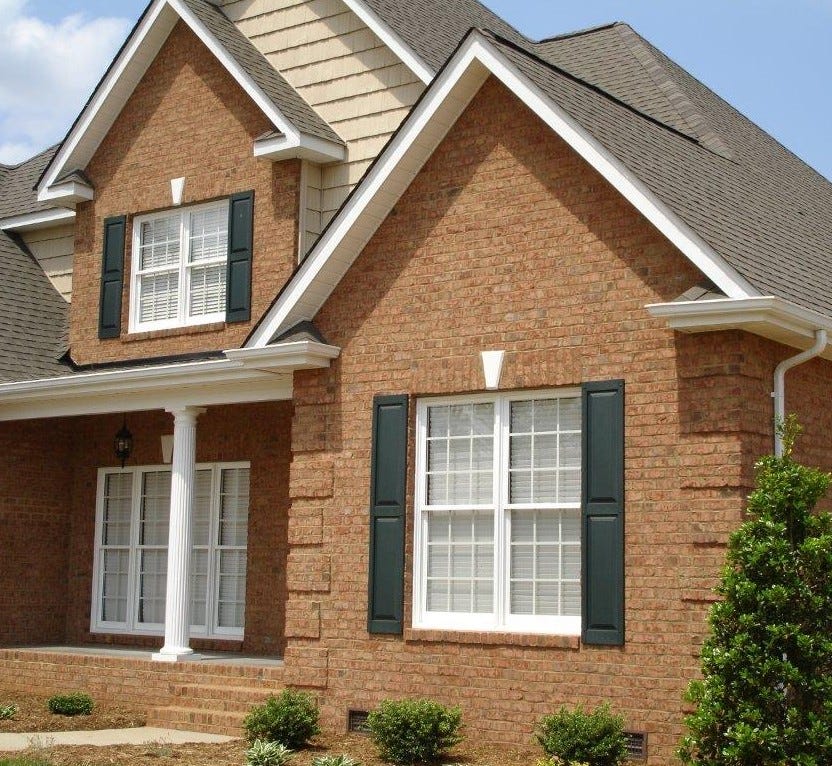
Today, shutters are often installed on a home by screwing them to either side of a window. The shutters above are a good example. They are not sized to ever cover the pair of windows and, furthermore, are too tall to work on this window anyway.
What has been forgotten is that shutters were the air conditioner of a home. Shutters swung open and were closed to help manage a room’s temperature. Louvered shutters worked great for bedrooms by allowing air to move through a room while also blocking out the sun and heat.
By opening the windows at night, then closing the shutters, the room stays cool with fresh air, and the sun doesn’t heat up the room in the morning.
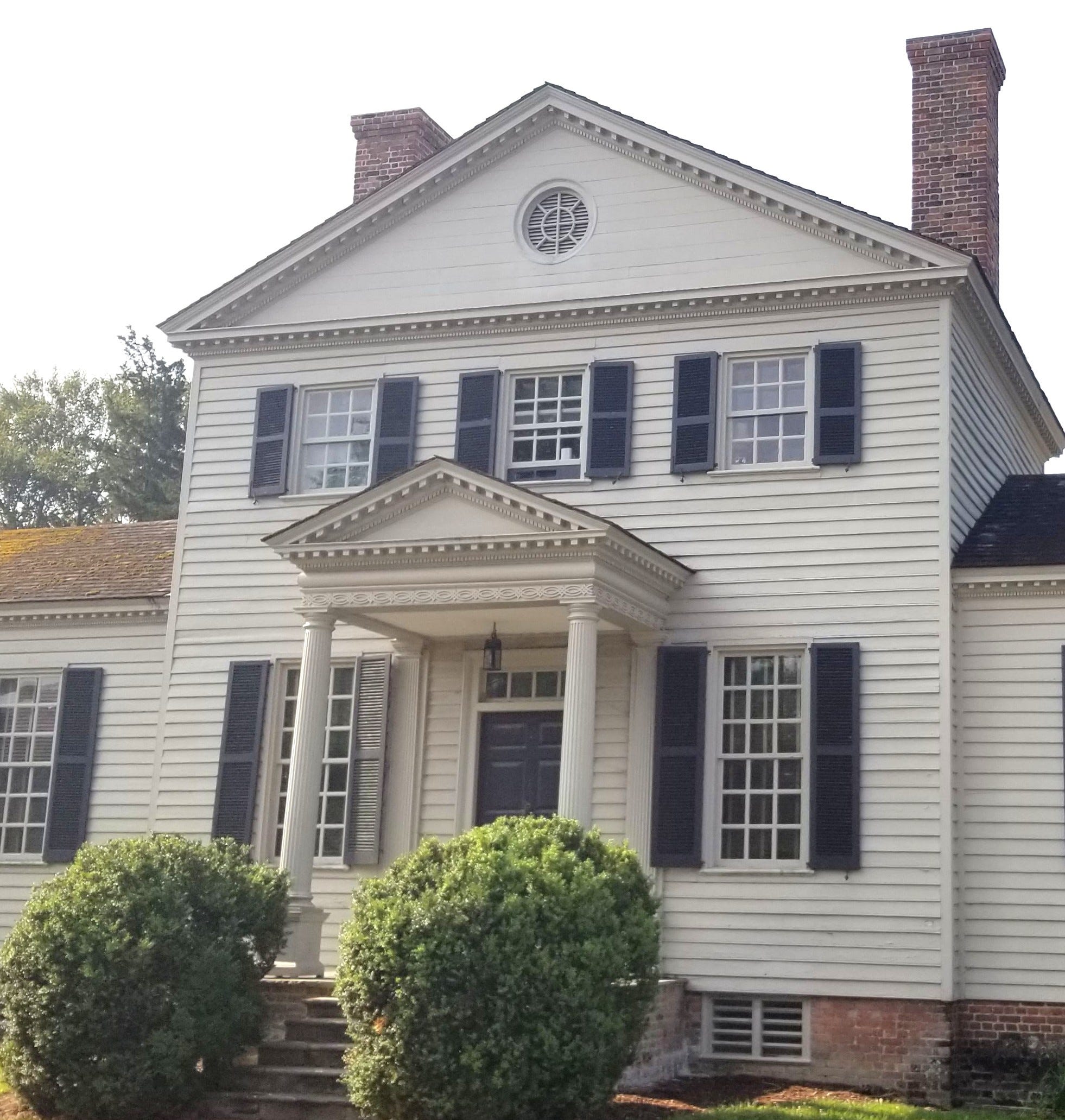
When you also add in the fact of how shutters were held open with counterweighted shutter dogs, or that they came in a great deal of variety - from panels to louvers to even plank-style shutters - soon this simple element can have a great impact on our homes. Authentic shutters on our homes require studying the past, and when I reference authentic details, this is what I am talking about.
In one of my recent videos on flooring, I was asked if all the narrative isn’t just fakery. I understand the spirit of the question, but I also must ask if anything we build is authentic. I mean, if I put a front porch on a traditional home, is that authentic, or am I just copying Greek and Roman traditions? Since the Romans built the Pantheon with a dome, is every dome built since then inauthentic? Of course, the answer is no.
I believe that nothing we build is completely authentic and unique. There is no such thing as genius or an original idea. Every detail is a copy of, or an inspiration from, the past. This, then, is why I get frustrated with a lot of new building today. The details are lazy, cheap, and uninspired. They are the fifteenth iteration of a Xerox copy, or worse, they are the result of a game of telephone, and the details we are trying to share bear only a slight hint of the original.
This short clip of a porch I was fixing shows details that are poorly scaled, shutters that are bolted to the home, badly proportioned columns, and the window over the front door that is just bad.
Claiming there is nothing new under the sun reminds me of the Harvard Classics, a book collection put together in 1909 by then-Harvard President Charles Eliot. It is a collection of great Western ideas, history, poetry, religion, and more. I was told that if you read them all, you would have the equivalent of a Harvard education. The idea inspired me and my roommate at the time. There are 42 volumes, and you can buy the collection on eBay for a few hundred dollars.
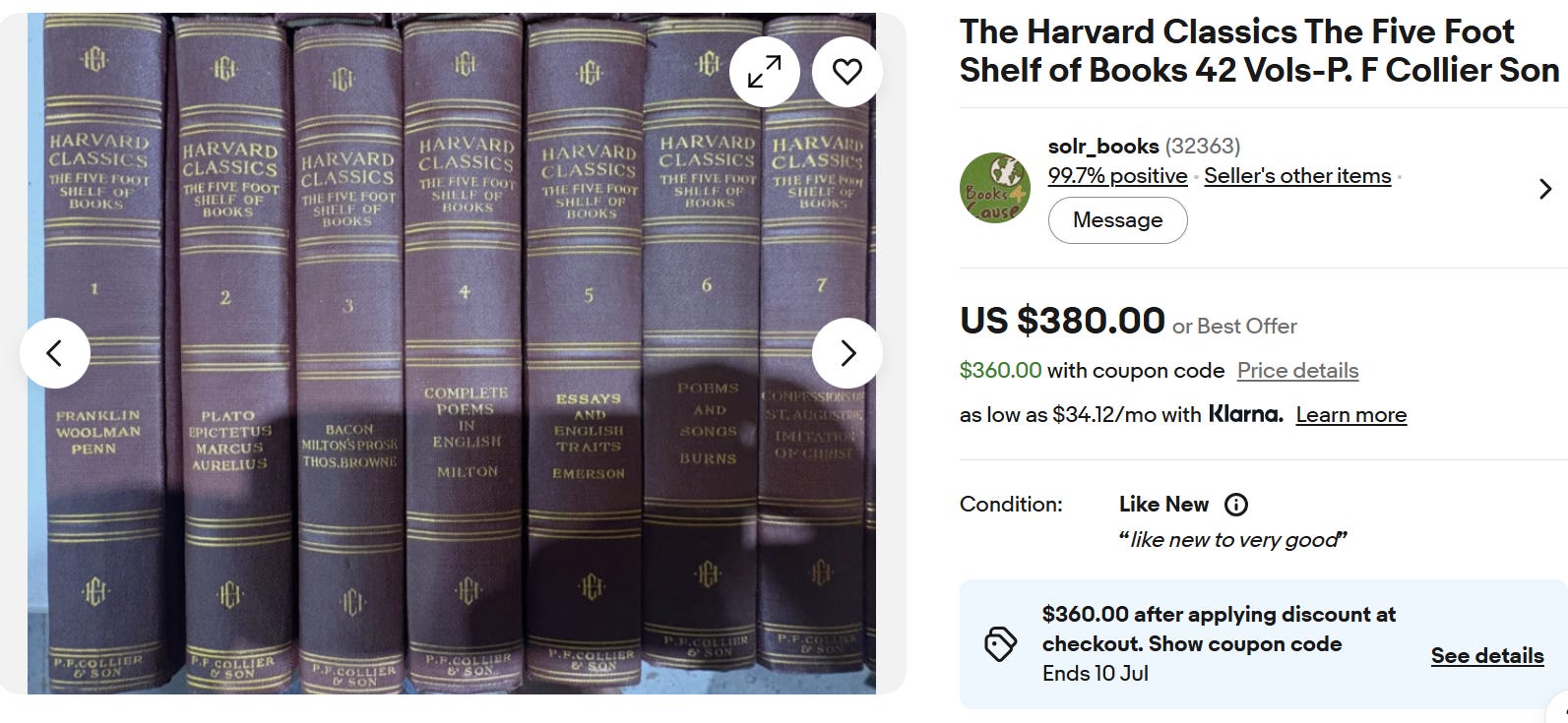
I never got them in college because they were hard to find. I also was intimidated by the five feet of shelf space they took up. I found out recently that they were never intended to be read in a single sitting but rather for 15 minutes each day, and you could get through the set in a year. I think we need the same kind of education for architecture.
The Harvard Classics’ idea that there is nothing new under the sun doesn’t mean we should stop writing or creating. Instead, it should inspire us to write better, to write more clearly, and more beautifully. I’m not proposing copying the past because I don’t have original ideas. Instead, I want it to be a springboard to better and more beautiful building.
If we think as well about the relearning that occurred during the Renaissance, it was an amazing time for intellectual and artistic growth. Andrea Palladio, a young stonemason, was educated by studying the past, and he began to visit Rome to study the great architecture of the past. He went on to write The Four Books of Architecture, the most famous book on architecture ever written. By studying the past, he was able to develop a new architectural style that changed the world. Thomas Jefferson claimed Palladio was his Bible. James Hoban designed the White House in the Palladian tradition.
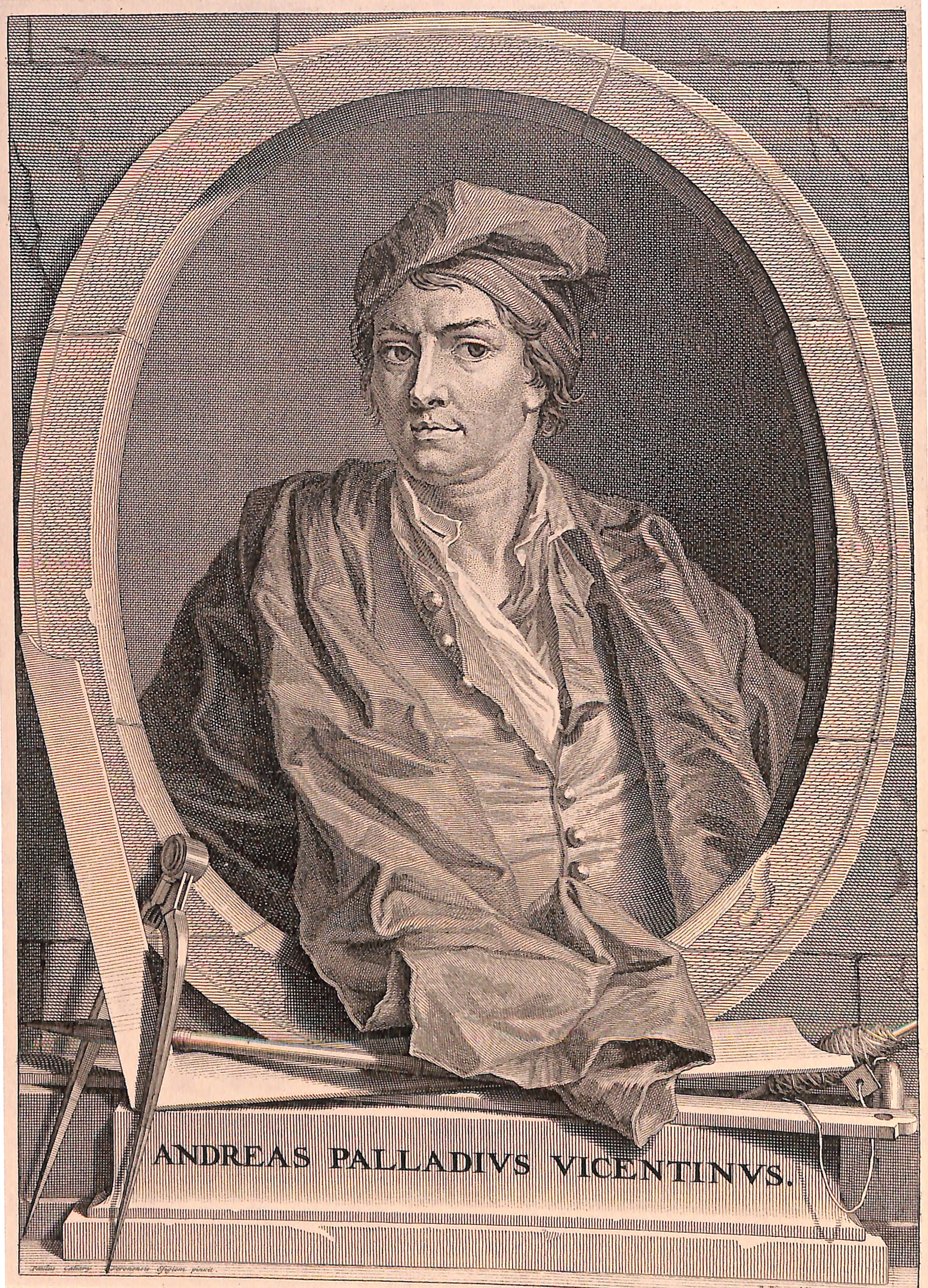
The goal for our building today is to study the past and be inspired to build better. Not only is Palladio a great example of this, but I would argue that our greatest modernist architects, Mies and FLW, were also part of this tradition. When they were just starting out, they studied the past and were inspired by it. They took a blend of past traditions and built on them to create new architecture, grounded in the past but looking forward. That should be our goal today.
Been reading "The Old Way of Seeing". One thing that has resonated with me is the emphasis on intuition. Do you think our data-driven world has lost intuition? And is that a reason we have lost the magic of building?
Thank you! Love this!